Next Trips

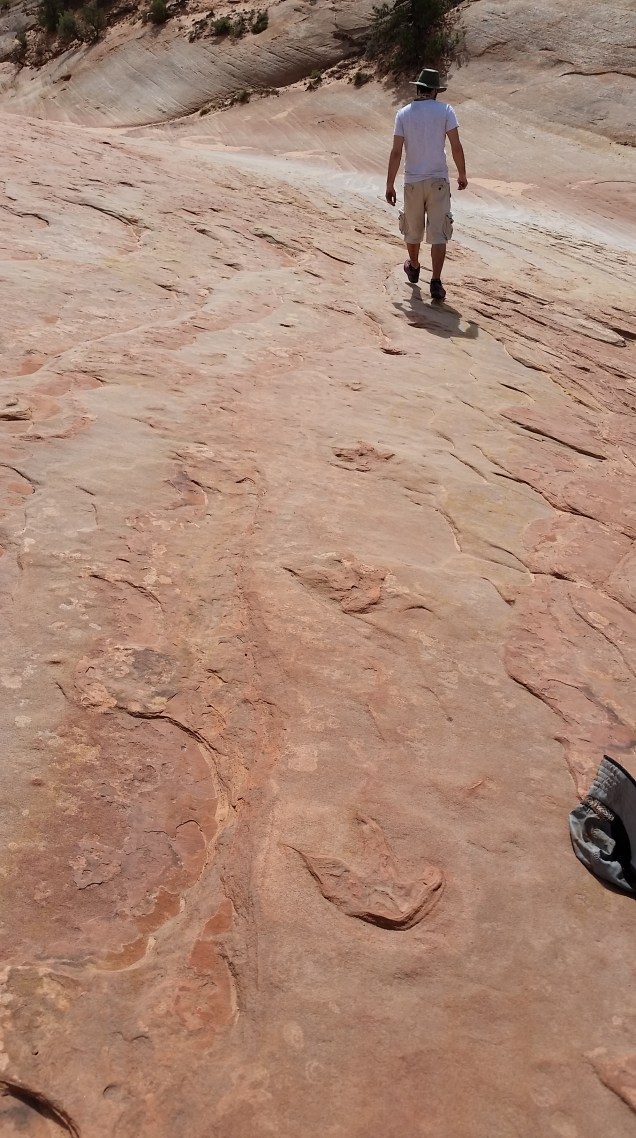
I’m taking reservations for Talking Rocks 2017. This week long tour will be centered in St. George, UT, and will examine geology in Zion and Bryce Canyon National Parks, Coral Pink Sand Dunes State Park, Snow Canyon State Park. We will touch Navajo Sandstone, Shinarump Conglomerate, Temple Cap Formation, Tertiary lava flows, dinosaur tracks, and petrified wood.

I’m also working on a Talking Rocks Northwest Tour, probably for the fall of 2016. This trip will visit outcrops and landscapes associated with Glacial Lake Missoula, Columbia River Flood Basalts, the exotic terranes of the South Cascades, Mt. Rainier, massive ancient landslides, glacial erratics, and a forest of petrified trees. This will be a shorter trip, 3 – 5 days.
Rock Stories

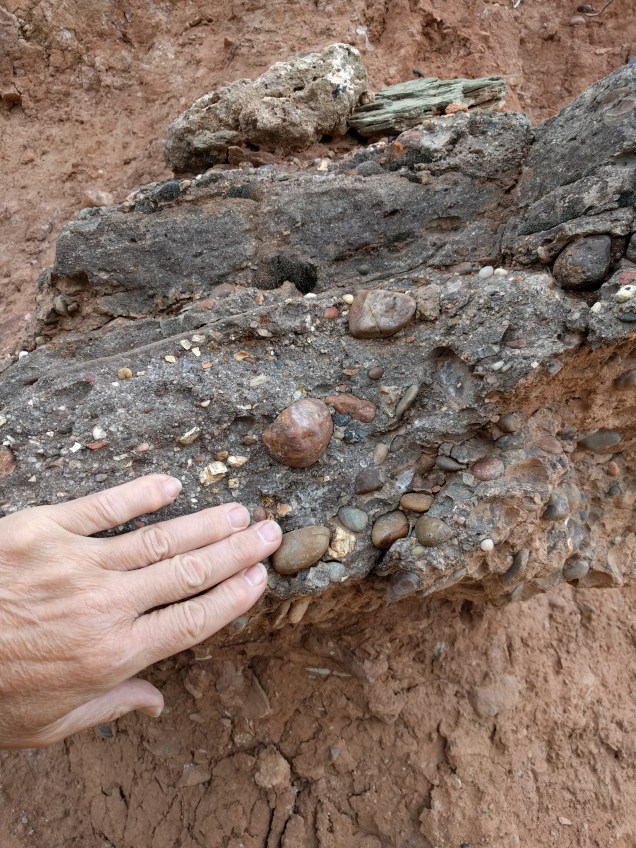
The rather ordinary chunk of conglomerate pictured below is part of a far-ranging story. On Kolob Terrace Road a lava flow emerges at the top of a canyon. As it descends the canyon it lies on different layers, showing the canyon existed when the lava emerged. At one point the lava is underlain by a flood deposit. The flood was locally violent, transporting boulders of Shinarump conglomerate up to 2 feet in diameter. For the conglomerate to be included in this flood deposit, the quartzite cobbles that make up the conglomerate had to have been first formed from sandstone which before becoming sandstone had to be sand which before it became sand had to be rock. Once the sandstone had formed then it could be metamorphosed into quartzite which could then be broken into pieces and rounded by water action into cobbles and gathered by a flood into a massive layer of gravel which then could be cemented together to form a layer of conglomerate. Then that conglomerate could be broken up by a flood and turned into boulders of conglomerate and rolled by a flood into place so a lava flow could bulldoze it’s way across the top of the flood deposit. Neat story. But it doesn’t stop there. After the lava flow, water continued cutting the canyon so that today the lava flow appears to be perched on top a narrow ridge running down the middle of the canyon. Pretty cool. And I didn’t even mention the petrified wood next to the conglomerate in the flood deposit.

IMG_20160516_123732

Two Seats Left on a Fantastic Geology Tour

May 8 -15, we will explore the geology around St. George, Utah. From Red Rock Canyon near Las Vegas to Buckskin Gulch on the Arizona border to Zion National Park. Under the tutelage of Dr. Gerry Bryant, twelve adventurers will learn the intricacies of the Navajo Sandstone and volcanism and erosion and reading landscapes.

The cost is $600. This covers housing (sleeping bags on the ground in tents) and breakfasts and suppers and ground transportation.

This trip will focus on geology, not arguments about Noah’s Flood. We will engage with the rocks as they present themselves in the field and seek to make sense of the evidence in front of us.

Dr. Bryant has deep expertise in the geology of the area and experience teaching geology in the field. At the time of this writing, there are only two seats left. First come. First served.

Dinosaur Museum

Journey Places

One of the places we will visit is the St. George Dinosaur Discovery Site at Johnson Farm, or more simply the dinosaur museum.

When Gerry and Debbie first told me about it, I thought, how good could a local museum be? I preferred to visit field sites. But since they were my hosts, I went. Wow. It is a superlative exhibit of dinosaur tracks. These are not isolated tracks, but long track ways. The only thing better would be to dig up some dinosaur fossils in my own yard.

The museum’s web site:  Dinosaur Track Museum


Journey Places

20150501_102622On our Geology Field Trip this May we will visit these places: Red Rock Canyon (near Las Vegas). Valley of Fire State Park. Pine Valley Mountains. Coral Pink Sand Dunes State Park. Moccasin Mountain Dinosaur Trackway. Buckskin Gulch. Zion National Park. All in the company of professor of geology who will help us understand what we are seeing. Why does that rock look like that? What caused that thing to happen? How is this feature related to what we saw 100 miles ago? Why is there lava on top of the sandstone in the middle of this canyon? If you are interested, I suggest you google images for each of the sites we will visit.

image_20150508220105832


Journey Details

Buckskin Gulch. One of the sites we will explore on our Geology Field Trip this May.

2016 Geology Field Trip

Exploring geology in the region surrounding St. George, Utah. Camping. Hiking. Campground conversation in the evenings.

Dates: May 8 – 15, 2016

Start and end at McCarran Airport, Las Vegas

Cost: about $600. This includes ground transportation, breakfasts and suppers, camping and entrance fees, professional fee. It does not include camping gear or lunches. (The price is still in flux, with the primary variable being ground transportation.)

Field trip professional: Gerald Bryant, Ph.D.

Places we will explore:  Red Rock Canyon (near Las Vegas). Valley of Fire State Park. Pine Valley Mountains. Coral Pink Sand Dunes State Park. Moccasin Mountain Dinosaur Trackway. Buckskin Gulch. Zion National Park.

Tour Host:  John McLarty


Desert Journeys

Come away. Study rocks by day and the star spangled sky by night. In the company of other men who are curious about the earth and God and humanity. Receive instruction from a geologist whose specialty is the rocks in front of us. Ponder. Laugh. Eat good food. Watch a campfire. This spring. With me and other friends. See the Journeys page for details.

Third

My personal history encapsulates Adventist history–movement from fascination (obsession) with end times to engagement with the beauty and responsibilities of our present world, movement from desperate hunger for acceptance by God to solid confidence that God takes delight in the life of his children, movement from a concern with theories of salvation to a laughing confidence that damnation is a vanishingly remote possibility, from a profound suspicion of science to a profound distrust of theologians.